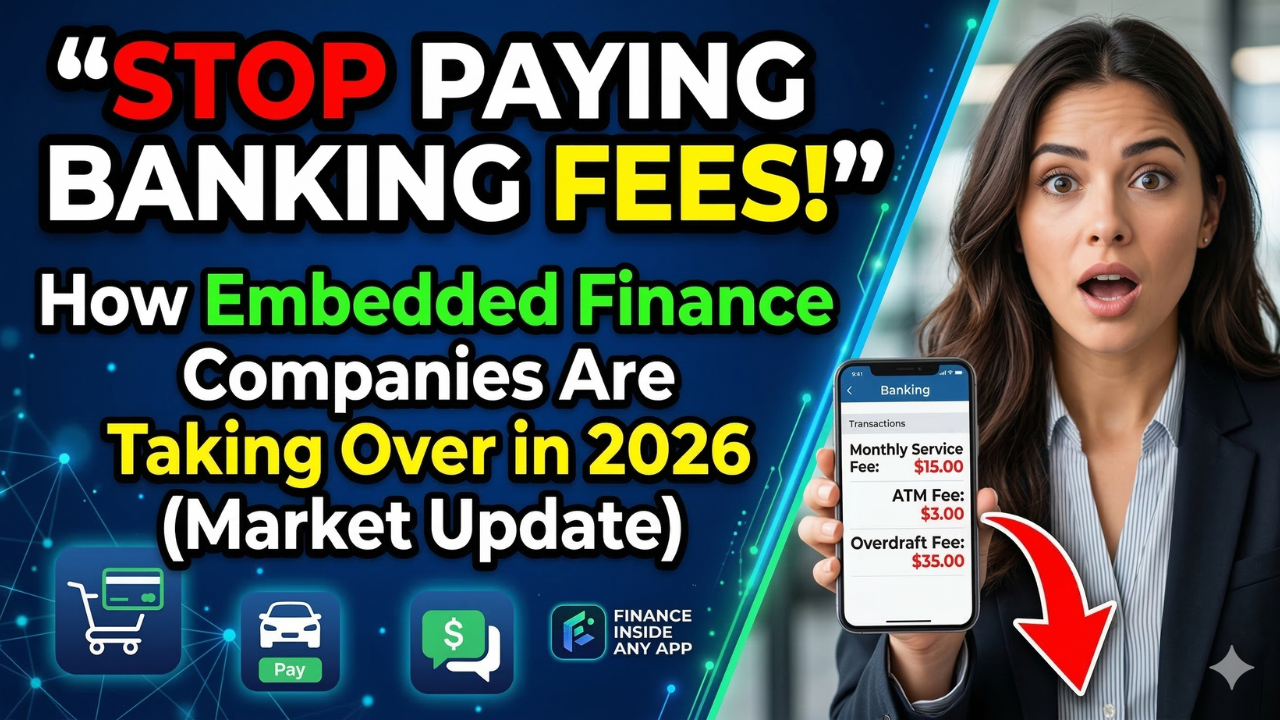
Embedded Finance Companies: Remember when getting a loan, opening a bank account, or even just processing a simple payment meant driving to a physical bank branch, sitting in a velvet chair, and signing a mountain of paperwork? Those days are officially dead.
There is a massive, silent financial revolution happening right now behind the screens of your favorite apps. Non-financial platforms—from your daily rideshare app to your favorite online store builder—are quietly turning into full-blown banks.
If you have ever bought something online using a “Buy Now, Pay Later” button or accepted an instant cash advance from your delivery app, you have already interacted with the invisible architecture of the future. Welcome to the era of embedded finance companies.
Whether you are a small business owner tired of getting rejected by traditional lenders or just an everyday consumer looking for zero-fee banking, you need to understand who is actually controlling your money in 2026. Here is your ultimate guide to the multi-trillion-dollar takeover you probably didn’t even notice was happening.
What Exactly is Embedded Finance?
Let’s cut through the Silicon Valley jargon. Embedded finance is simply the integration of financial services into non-financial platforms. It is the technology that allows a company that isn’t a bank to act exactly like a bank.
Instead of forcing you to leave an app, log into your banking portal, transfer funds, and return to make a purchase, embedded finance makes the money part invisible.
- The Uber Example: When you finish an Uber ride, you just get out of the car. The payment happens automatically in the background. Furthermore, Uber offers its drivers instant payouts and dedicated debit cards. Uber isn’t a traditional bank, but they offer banking services natively.
- The Shopify Example: If you run an e-commerce store on Shopify, you don’t need to go to a major bank for a business loan. Shopify analyzes your daily sales data and offers you working capital directly inside your dashboard.
What magic is making such an arrangement possible? Embedded finance companies. These are the behind-the-scenes tech giants that hold the complex banking licenses and build the API software bridges, allowing regular brands to slap their logo on a credit card or loan product.
The $7 Trillion 2026 Explosion
If you think this is just a passing tech fad, the latest numbers will shock you. Traditional banks are absolutely sweating right now.
According to recent industry analysis, transaction volumes flowing through embedded finance channels are projected to smash through the $7 trillion mark in the US alone this year. That is a massive leap from the $2.6 trillion we saw just a few years ago. Furthermore, the overall embedded finance market is compounding at an aggressive annual growth rate, projected to surpass a staggering $454 billion in global market value by the end of the decade.
Why the explosive growth? Because consumers are tired of friction, and businesses have realized that offering financial services (like loans or custom checking accounts) is the ultimate way to keep customers locked into their ecosystem while generating massive new revenue streams.
The Big Players: Top Embedded Finance Companies
You rarely see their names on the front of the app, but these are the heavyweights actually powering the 2026 financial ecosystem:
- Stripe (Stripe Treasury): You likely know Stripe as the payment processor for millions of websites, but with Stripe Treasury, they allow platforms to embed actual bank accounts and cash management services directly into their products.
- Adyen: The European powerhouse that handles complex global payments for massive enterprises like McDonald’s and Uber. They specialize in “Adyen for Platforms,” allowing massive digital marketplaces to route payments, split funds, and issue cards seamlessly.
- Plaid: If you have ever linked your bank account to Venmo or a budgeting app, you used Plaid. They are the ultimate “data layer” of embedded finance, securely connecting your bank’s legacy data to modern fintech apps so lenders can make real-time decisions without needing a traditional credit score.
- Unit & Solaris: These are the “Banking-as-a-Service” (BaaS) kings. If a tech startup wants to launch a fully compliant, licensed debit card in a matter of weeks instead of years, they use companies like Unit (in the US) or Solaris (in Europe) to handle all the heavy regulatory lifting.
Beyond Just Checking Accounts
In 2026, embedded finance companies aren’t just facilitating basic payments anymore. They are taking over every single aspect of your financial life:
- Embedded Lending (BNPL): Companies like Affirm and Klarna have completely normalized “Buy Now, Pay Later.” You no longer need to apply for a high-interest credit card to finance a couch; the loan is underwritten and approved instantly at the digital checkout counter.
- Embedded Insurance: Ever book a flight and click a single box to add travel insurance? Or, buy a laptop online and add an extended warranty with just one click. Insurtech companies are embedding their policies directly into the point of sale, eliminating the need to ever speak to an insurance broker.
- Embedded Investing: Everyday apps are now allowing users to round up their spare change and automatically invest it into fractional shares or cryptocurrency, completely bypassing traditional Wall Street brokerage firms.
The Bottom Line
The financial power dynamic has permanently shifted. You no longer have to adapt your life to the strict, outdated rules of traditional banks. Thanks to the explosive growth of embedded finance companies in 2026, the banking services you need are coming directly to you, hiding seamlessly inside the software you already use every single day.
Disclaimer: The information provided in this article is for educational and general informational purposes only and does not constitute financial, investment, or legal advice. Changes may occur in financial markets, lending algorithms, and banking regulations. Always thoroughly read the terms and conditions of any financial product, loan, or “Buy Now, Pay Later” agreement, and consult a licensed financial advisor before making significant financial decisions.
Understanding Embedded Finance Ecosystems
This breakdown details how non-financial platforms integrate banking infrastructure directly into their apps to offer seamless payments and lending to everyday users.